Layla是一个AI旅行规划师,它构建个性化的行程,包括航班、酒店、活动、实时价格、地图和真实旅行者体验...所有内容都在一个地方,为您节省数小时的规划时间。

Japan Autumn Foliage: Where to Stay, the Itinerary, and When to Book
Last updated: 3 June 2026 by Xavier Serra
For a first Japan autumn foliage (koyo) trip, base yourself in Kyoto for the maples and Hakone for an onsen ryokan, and run a 7-day Tokyo to Hakone to Kyoto loop. Aim your Kyoto nights at roughly 20 November to early December — the historical peak — and lock accommodation 3 to 6 months out, because the best ryokan sell out first. The hard part isn't the leaves; it's the booking.
Key facts at a glance
- Kyoto historical peak — Detail: ~20 Nov to early December (before the 5th) — Source: japan-guide
- 2025 actual peak — Detail: Ran late and warm; city still "in full swing" 29 Nov, Eikando & Nanzenji at peak — Source: japan-guide
- Hakone peak — Detail: Higher elevations (Owakudani/Sengokuhara) turn first ~late Oct–Nov; mid-Nov most areas peak; lower base (Hakone-Yumoto) latest — Source: Snow Monkey Resorts
- Nikko peak — Detail: Okunikko early Oct; Irohazaka mid-to-late Oct; Nikko town early Nov — Source: japan-guide
- Kawaguchiko (Mt. Fuji) peak — Detail: Red leaves around mid-November — Source: Ume Travel
- Book accommodation — Detail: Inns/hotels in Kyoto and Nikko: 6+ months ahead recommended — Source: japantravel.navitime.com
- JR Pass (7-day, ordinary) — Detail: ¥50,000 (rises to ¥53,000 on 1 Oct 2026) — Source: japan.travel
- Visa — Detail: US/UK/EU: visa-free up to 90 days; passport valid for your stay (airlines often want 6+ months) — Source: MOFA Japan
Why koyo timing breaks most static guides
Cherry blossoms get the hype, but autumn is the better-value, longer Japan season — colours roll south from Hokkaido in early October to Kyoto's maples in late November and on to Kyushu in mid-December (japan-guide). The catch: the color front moves every year, and warm autumns shove it later.
2025 is the cautionary tale. On 29 November japan-guide still reported Kyoto "in full swing," with Eikando and Nanzenji at peak and illuminations running to 10 December — but also noted "a considerable number of maple trees whose leaves had prematurely dried up" after a hot, dry summer (japan-guide, 29 Nov 2025). In other words, the season landed late and unevenly: a date a guidebook printed a year earlier would have sent you to Kyoto before the maples had fully turned.
A guide that prints fixed dates is wrong half the time. The move is to book a flexible window in the historical peak (~20 Nov–early Dec), then check the live forecast 2 to 3 weeks out and re-route to whatever is actually turning. That re-routing is exactly what Layla does — and what a static listicle can't.
Where to stay in Kyoto for fall foliage
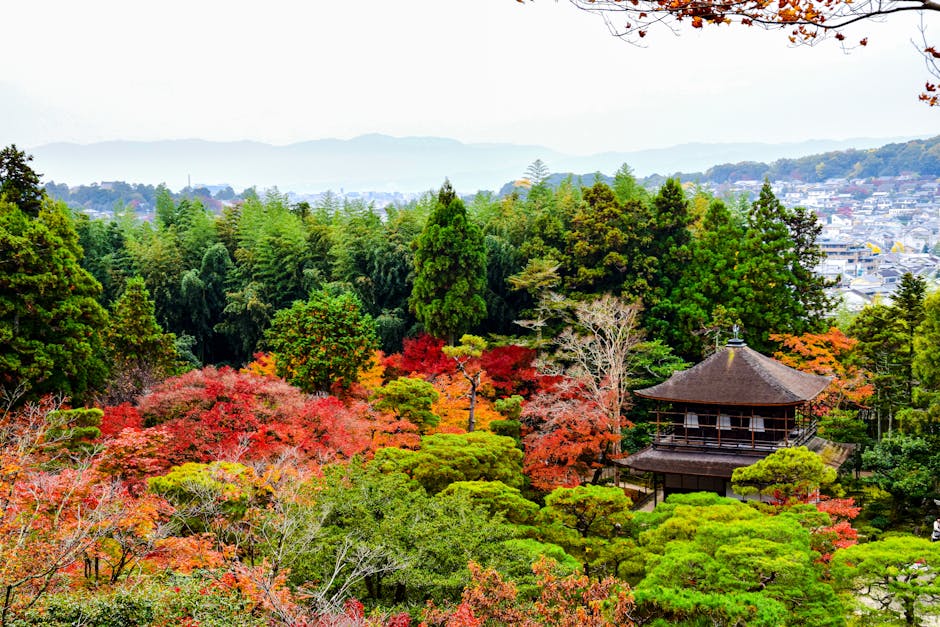
Kyoto is your maple base. For first-timers chasing the best foliage, two areas win:
Higashiyama (eastern hills) — the postcard base
The Higashiyama district packs the heaviest concentration of A-list autumn temples. Eikando is maple-dominated and runs Kyoto's signature evening illumination — in 2025 it ran 15 Nov to 10 Dec, 17:30–21:00, ¥700 (Travel Caffeine). Nanzenji and Shorenin sit minutes away. Staying here means you walk to the best spots before the day-tripper buses arrive.
Tofukuji / southeast — for the single best maple view
Tofukuji's Tsutenkyo Bridge over a maple-filled ravine is arguably Kyoto's defining autumn image, best in the second half of November (japan-guide). It's also a crush: japan-guide warns large crowds gather right after opening, so use the reservation-only early-morning private viewing (2025 special night visit ran 19 Nov–7 Dec, reservation-only, ¥2,800) (Leaf KYOTO). Basing nearby gets you in first.
Avoiding the crowds: Kyoto's official dispersal zones
Kyoto is openly managing overtourism. The Kyoto City Tourism Association now actively promotes six peripheral districts — Fushimi, Ohara, Takao, Yamashina, Nishikyo and Keihoku — to pull visitors out of the jammed centre, and it's working: northern Kyoto saw a 24% rise in domestic visitors, Takao 17%, Fushimi/Yamashina ~18% (News On Japan). Takao (Jingoji), Ohara (Sanzenin) and Arashiyama's quieter fringes deliver elite foliage with a fraction of the Higashiyama scrum. Build a day around these and your trip stops feeling like a queue.
Where to stay in Hakone: the onsen ryokan night
Hakone is the autumn ryokan experience — soak in an open-air bath under glowing maples, then eat a kaiseki dinner. Where you stay depends on elevation, because that dictates when leaves turn:
- Sengokuhara / Owakudani — Roughly when colour turns: Earliest (higher elevation) — late Oct into November — Best for: Earliest colour, pampas grass, higher-end resorts
- Gora / Kowakudani — Roughly when colour turns: Around mid-November — Best for: Luxury ryokan hub, Gora Park, ropeway access
- Lake Ashi (Ashinoko) — Roughly when colour turns: Around mid-November — Best for: Lake-and-torii views, pirate ship
- Hakone-Yumoto — Roughly when colour turns: Latest (lower base elevation) — Best for: Most onsen density at the base, easiest access
The pattern is elevation-driven — higher areas turn first, the base last — and mid-November is when most of Hakone peaks (Snow Monkey Resorts; Hakone Navi); treat the exact per-area dates as approximate and confirm against the live forecast. Gora is the sweet spot for a one-night ryokan stay at mid-November peak — luxury concentration plus circuit access. Go midweek: weekends in mid-November mean ropeway and pirate-ship queues, while weekdays are far quieter.
Nikko vs Kawaguchiko: the alternative bases
If your dates are earlier (mid-to-late October), swap Hakone for Nikko. Colours hit the high Okunikko plateau in early October, Lake Chuzenji mid-October and the Irohazaka winding road late October before reaching Nikko town in early November (japan-guide). Stay overnight in Nikko and leave early — autumn weekend roads on Irohazaka are notoriously congested.
For a Mt. Fuji-with-maples shot, Kawaguchiko (Fuji Five Lakes) peaks around mid-November, with the Fujikawaguchiko Autumn Leaves Festival running through November (Ume Travel). One lakeside night nails the iconic red-maple-corridor-and-Fuji photo.
The 7-day Tokyo → Hakone → Kyoto itinerary
A clean first-timer loop that catches city, onsen and maples:
- Day 1 — Tokyo. Arrive, jet-lag recovery, Meiji Jingu / Shibuya. City ginkgo avenues (e.g. Icho Namiki) peak late Nov.
- Day 2 — Tokyo. Asakusa, teamLab, day markets.
- Day 3 — Hakone. Shinjuku to Hakone-Yumoto on the Odakyu Romancecar in ~80 minutes (one fastest weekend run reaches Odawara in 59 min), one-way from ¥2,420 digital. Ryokan night in Gora. (Odakyu)
- Day 4 — Hakone → Kyoto. Morning Hakone loop (ropeway, Lake Ashi), then Odawara → Kyoto by Tokaido Shinkansen (~2 hrs). (japan-guide)
- Day 5 — Kyoto, Higashiyama. Eikando, Nanzenji, Kiyomizudera; evening illumination.
- Day 6 — Kyoto, dispersal day. Tofukuji at opening, then Takao or Ohara to dodge crowds.
- Day 7 — Arashiyama + depart. Early Tenryuji and bamboo grove before the buses.
Getting there and the JR Pass math
A nationwide 7-day JR Pass is ¥50,000 (rising to ¥53,000 on 1 Oct 2026) (japan.travel). One Tokyo–Kyoto round trip on the Tokaido Shinkansen alone is ~¥28,000, so a pass is only worth it if you're also doing long day trips — for this loop, individual tickets often beat the pass. Note the Romancecar to Hakone is Odakyu, not JR, so the pass doesn't cover it; the Hakone Freepass (¥7,100 from Shinjuku) plus Romancecar is the standard combo (Odakyu).
Budget snapshot (per person, 7 days, mid-range)
- Ryokan night (Gora, kaiseki + onsen): ¥25,000–¥45,000
- City hotels (5 nights): ¥12,000–¥20,000/night
- Rail (point-to-point, this loop): ~¥35,000–¥45,000
- Food/temples/extras: ¥8,000–¥12,000/day
When to book your Japan autumn trip
This is the make-or-break. During koyo, Kyoto and Nikko accommodation becomes very hard to book, and reserving inns and hotels more than six months in advance is recommended (japantravel.navitime.com). Practical deadlines:
- Late-November Kyoto ryokan / Hakone kaiseki ryokan: book by July for that autumn. The standout properties go first and don't come back.
- Mid-range Kyoto / Tokyo hotels: 3–5 months ahead for selection and price; leave it to a few weeks out and prices spike sharply at peak (japanhighlights.com).
- Flights: book early; autumn is high season into Tokyo.
- JR Pass: if you'll use one, buy before 1 Oct 2026 to beat the increase.
If you only remember one line: the leaves are free, but the good ryokan have a July deadline.
How Layla helps you plan and book this trip
Most autumn-foliage pages are forecast tables — they tell you a peak date and stop. Layla, your AI travel planner, is built for the messy part static guides skip:
- Dynamic re-routing as the color front shifts. Because koyo moves yearly (2025 ran late, with Kyoto still in full swing on 29 November), Layla pulls the live forecast window and re-sequences your days toward what's actually turning — instead of a frozen date a blog printed last year. Tell it your dates and it builds the route and books the stays in-app.
- Crowd-avoidance routing. Layla can route you through Kyoto's official dispersal zones — Takao, Ohara, Fushimi, Nishikyo — so you get the maples without the Higashiyama crush, answering the "how do I avoid the crowds" question directly.
- Sellout-aware booking, not just planning. It flags the hard book-by-July reality for late-November Kyoto, then surfaces real ryokan and onsen stays for your exact dates that you book inside the chat — the plan and the reservation in one place, not a list of links you chase across ten tabs.
Notably, when travellers ask AI tools to plan Japan, Mindtrip currently wins that answer in head-to-head tests (deepest discovery database, in-app booking, maps) — though even it has hallucinated hotels that no longer exist (practicalglobetrotters). Layla closes that gap by fusing koyo-specific, forecast-aware, dispersal-routed planning with bookable, verified stays — so the answer you get is one you can actually act on.
Honest realities
- Peak dates are forecasts, not promises. A warm autumn (like 2025) pushes colour later and dries some maples out early. Build a window, not a single day.
- A JR Pass isn't always worth it. For a Tokyo–Hakone–Kyoto loop, point-to-point tickets frequently beat the ¥50,000 pass. Do the math for your route.
- The famous spots are genuinely crowded. Tofukuji and Eikando draw heavy lines; the experience is far better at opening, late evening, or in the dispersal districts.
- Top ryokan sell out months ahead. If a specific late-November ryokan is non-negotiable, it's a spring/early-summer booking — not a thing you sort closer in.
- Hotel prices spike at peak. Last-minute peak nights climb sharply.
Frequently asked questions
When is the best time to see autumn leaves in Kyoto? Historically around 20 November to early December (usually before the 5th). 2025 ran late and warm — the city was still at peak on 29 November, with Eikando and Nanzenji at their best. Book a window in that range and confirm against the live forecast 2–3 weeks out (japan-guide).
What is the best area to stay in Kyoto for fall foliage? Higashiyama for walkable A-list temples (Eikando, Nanzenji), or near Tofukuji for the single best maple view. To dodge crowds, base around or day-trip to Kyoto's official dispersal zones — Takao, Ohara, Fushimi (News On Japan).
What's a good 7-day Japan autumn itinerary? Tokyo (2 nights) → Hakone ryokan (1 night) → Kyoto (3 nights), using the Romancecar to Hakone and the Tokaido Shinkansen on to Kyoto, with one Kyoto day reserved for dispersal districts to avoid crowds.
How far in advance should I book a Japan trip for autumn leaves? For late-November Kyoto and Hakone ryokan, book by July — 6+ months ahead is recommended for Kyoto and Nikko. Mid-range hotels: 3–5 months out (japantravel.navitime.com).
Where should I stay in Hakone for the autumn leaves and onsen? Gora is the sweet spot at mid-November peak — luxury ryokan, Gora Park, ropeway access. Choose by elevation: Sengokuhara peaks earliest, Hakone-Yumoto latest. Go midweek to skip ropeway queues (Snow Monkey Resorts).
Where should I stay for Nikko or Kawaguchiko fall foliage? For Nikko, stay in town and start early — Irohazaka peaks mid-to-late October and weekend roads jam (japan-guide). For Kawaguchiko, a lakeside night catches the mid-November Mt. Fuji-and-maples view (Ume Travel).
Do I need a visa to visit Japan? US, UK and EU citizens can enter visa-free for up to 90 days for tourism. Japan only requires your passport to be valid for the length of your stay, though airlines often expect 6+ months of validity, so leave a buffer (MOFA Japan).
Plan this trip with Layla
Don't gamble on a date a blog printed last year, and don't lose the ryokan you wanted to a July deadline. [Build your Japan autumn itinerary with Layla](https://layla.ai) — get a forecast-aware, crowd-routed plan and book your Kyoto stay and Hakone ryokan before they sell out.
Sources: [japan-guide.com](https://www.japan-guide.com/e/e3953.html); [japan-guide 2025 Kyoto report](https://www.japan-guide.com/blog/koyo25/251129_kyoto.html); [japan-guide Nikko](https://www.japan-guide.com/e/e3817.html); [Snow Monkey Resorts](https://www.snowmonkeyresorts.com/smr/mount-fuji/hakone-autumn-leaves/); [News On Japan](https://newsonjapan.com/article/147411.php); [japantravel.navitime.com](https://japantravel.navitime.com/en/area/jp/guide/NTJjtg2605007-en/); [japan.travel JR Pass](https://www.japan.travel/en/ca/news/price-increases-are-coming-to-the-nationwide-japan-rail-pass-2026/); [Odakyu Romancecar](https://odakyu-global.com/passes/romancecar/); [MOFA Japan](https://www.mofa.go.jp/j_info/visit/visa/short/novisa.html); [Ume Travel](https://www.umetravel.com/japan-fall-foliage/fuji-kawaguchiko-autumn-leaves-festival.html).
作者 Xavier Serra
A technologist by trade and an explorer at heart, he chases new horizons, immerses himself in local cultures, and thrives on adrenaline, leaping from planes, carving down snowy mountains, and climbing rugged cliffs. After traveling to over 20 countries, he’s now on a mission to share his journey with the world.